
1.1730

CHEMICAL COMPOSITION

C
0,45%
Si
0,30%
Mn
0,70%
P
0,025%
S
0,003%
As-supplied Hardness
190 – 207 HB
Tensile Strength
640 N/mm²
Working Hardness

As-supplied Hardness

APPLICATIONS

  • Material for mould and die making standard parts
  • Base plates and frames for jig manufacturing
  • Mould components, construction parts
  • Clamping devices

TEMPERING CHART

TREATMENT OPTIONS

Soft Annealing Stress-Relieving
Heat- Treatment
Hardening Quenching
Temperature 680 – 720 °C 600 – 650 °C 830 – 850 °C Immediately after hardening, slowly heat to tempering temperature. (160–300 °C, depending on desired hardness) and allow to cool in air.

Oven time: 1 hour per 20 mm plate thickness, at least 2 hours.
Cooling Furnace Cooling Furnace Cooling Water
Workability

● ● ● ● ●

Toughness

● ● ● ○ ○

Dimensional stability

● ● ● ● ○

Wear resistance

● ● ● ● ○

Corrosion Resistance

● ● ○ ○ ○

Polishability

● ● ● ○ ○

Weldability

● ● ● ● ○


1.2085

CHEMICAL COMPOSITION

C
0,29 – 0,32%
Si
0,35 – 0,40%
Mn
1,30 – 1,40%
P
max. 0,03%
S
0,05 – 0,10%
Cr
15,00 – 16,00%
Ni
0,55 – 0,70%
Mo
max. 0,08%
As-supplied Hardness
285 – 325 HB
Tensile Strength

950 – 1100 N/mm²

Working hardness

As-supplied hardness

APPLICATIONS

  • Mould plates and mould inserts for moulding tools
  • Plates for corrosion resistant moulds
  • In the processing of chemically aggressive plastics

CHEMICAL COMPOSITION
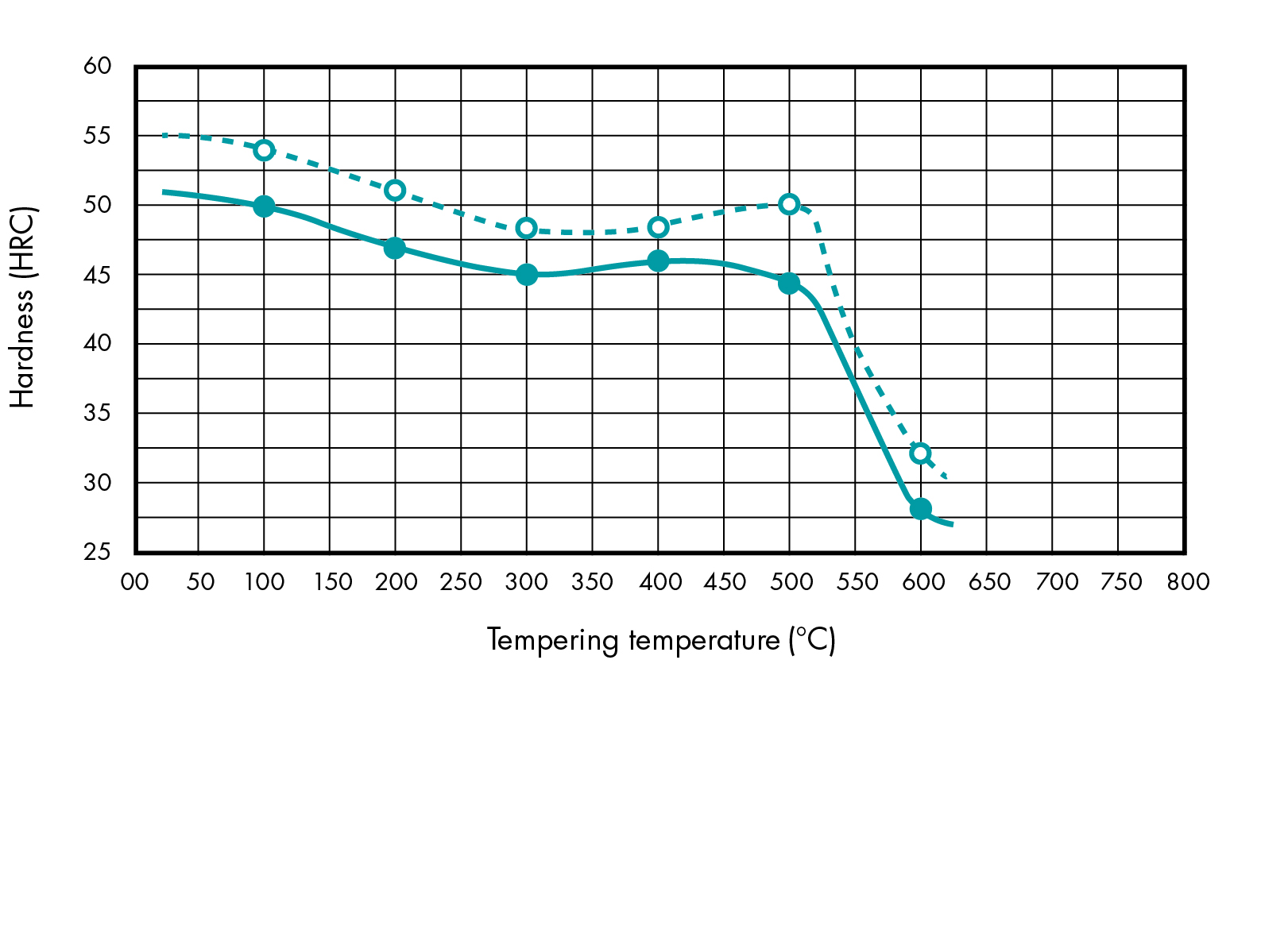
TREATMENT OPTIONS

Soft annealing Stress-Relieving
Heat-Treatment
Hardening Quenching
Temperature 760 – 780 °C 650 °C 1000 – 1040 °C Immediately after hardening, slowly heat to tempering temperature. Furnace time: 1 hour per 20 mm plate thickness, at least 2 hours. Air cooling. At least three tempering cycles recommended.
Cooling 10 – 20 °C/h furnace cooling 1 – 2 h furnace cooling Oil, N2, salt bath
(500 – 550 °C), air
Workability

● ● ● ● ●

Toughness

● ● ● ● ○

Dimensional stability

● ● ● ● ●

Wear resistance

● ● ● ● ○

Corrosion Resistance

● ● ● ● ●

Polishability

● ○ ○ ○ ○

Weldability

● ● ● ○ ○


1.2311

CHEMICAL COMPOSITION

C

0,35 – 0,45%

Mn

1,30 – 1,60%

Si

0,20 – 0,40%

P

max. 0,020%

S

max. 0,035%

Cr

1,80 – 2,10%

Mo

0,15 – 0,25%

H[ppm]

max. 1,80%

As-supplied hardness

280 – 325 HB

Tensile strength

950 – 1100 N/mm²

Working hardness

As-supplied hardness

Applications

  • Cavity plates for moulds and mould bases with high resistance
    and good surface finishing

CHEMICAL COMPOSITION
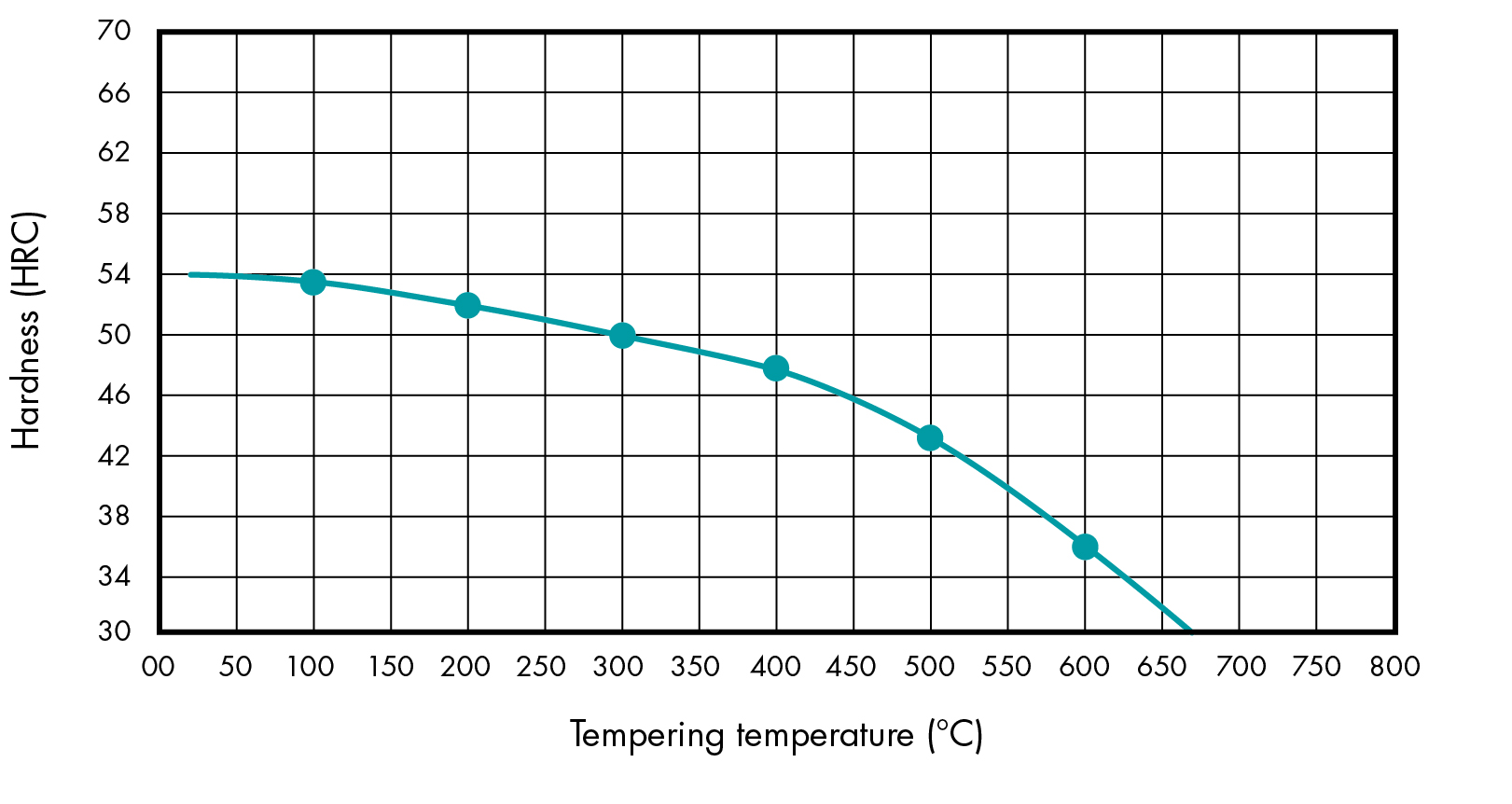
TREATMENT OPTIONS

Soft annealing Stress-Relieving
Heat-Treatment
Hardening Quenching
Temperature 710 – 740 °C 500 – 550 °C 840 – 870 °C Preheat to 350°C, then increase with 50°C/h to 600 °C; maintain for 12 hours; cool in the oven to 350 °C, then open and air cool.
Cooling 4 – 6 h furnace cooling 2 – 3 h furnace cooling Oil, hot bath, air
Workability

● ● ● ○ ○

Toughness

● ● ● ● ○

Dimensional stability

● ● ● ○ ○

Wear resistance

● ● ● ○ ○

Corrosion Resistance

● ○ ○ ○ ○

Polishability

● ● ● ○ ○

Weldability

● ● ● ● ○


1.2312

CHEMICAL COMPOSITION

C

0,35 – 0,45%

Si

0,20 – 0,40%

Mn

1,40 – 1,60%

P

max. 0,025%

S

0,05 – 0,10%

Cr

1,80 – 2,10%

Mo

0,15 – 0,25%

As-supplied Hardness

280 – 320 HB

Tensile Strength

950 – 1050 N/mm²

Working Hardness

As-supplied Hardness

Applications

  • Material for high-strength mould frames in plastic and die casting moulds

  • Medium to large mould bases for the plastics industry

  • Construction parts

CHEMICAL COMPOSITION
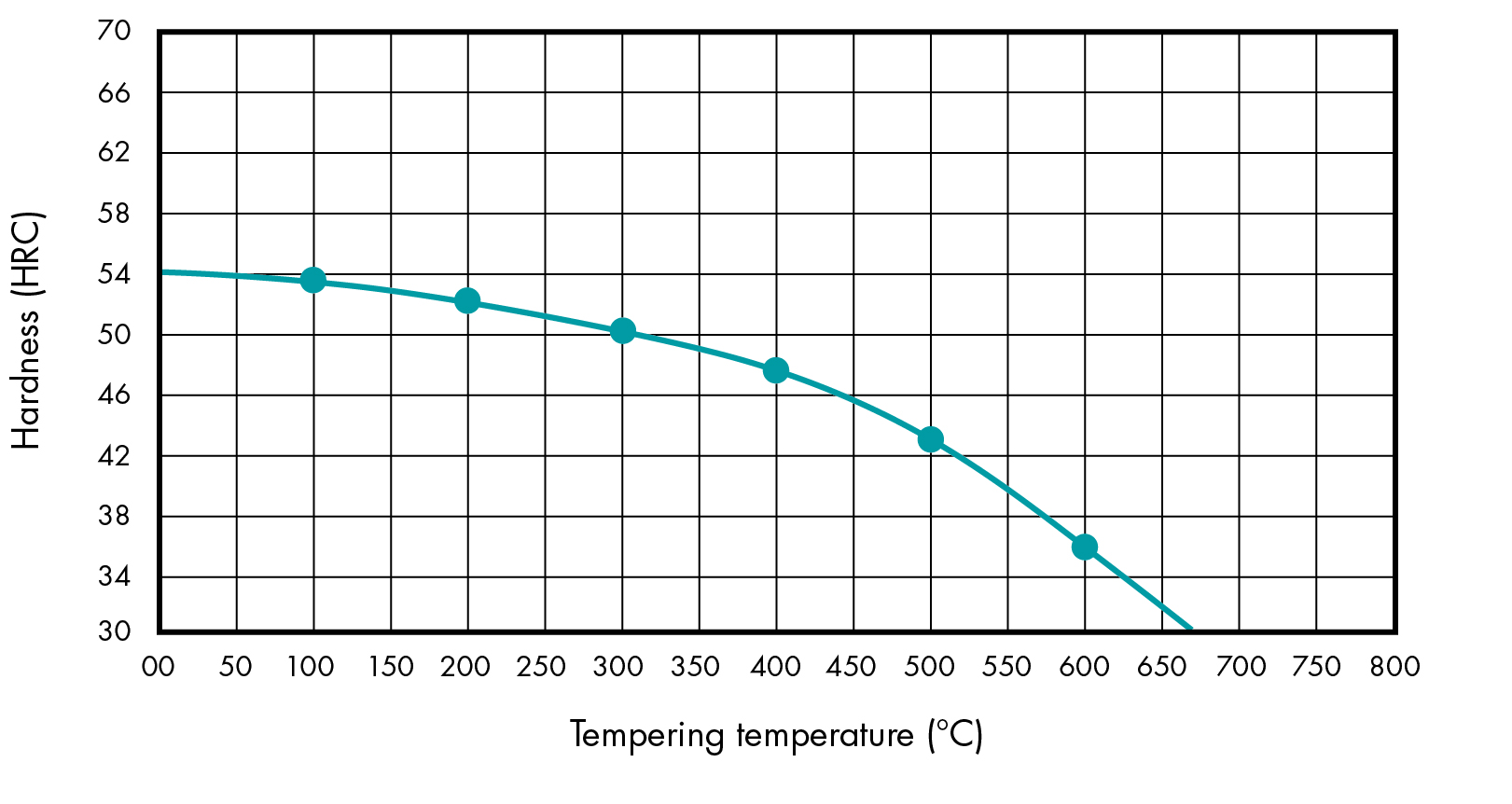
TREATMENT OPTIONS

Soft annealing Stress-Relieving
Heat-Treatment
Hardening Quenching
Temperature 710 – 740 °C 500 – 550 °C 840 – 870 °C Preheat to 350 °C, then increase with 50°C/h to 600°C; maintain for 12 hours; cool in the oven to 350°C, then open and air cool.
Cooling 4 – 6 h furnace cooling 2 – 3 h furnace cooling Oil, hot bath, air
Workability

● ● ● ● ●

Toughness

● ● ● ● ○

Dimensional stability

● ● ● ● ○

Wear resistance

● ● ● ○ ○

Corrosion Resistance

● ● ○ ○ ○

Polishability

● ○ ○ ○ ○

Weldability

● ● ● ● ○


1.2343

CHEMICAL COMPOSITION

C

0,33 – 0,41%

Si

0,80 – 1,20%

Mn

0,25 – 0,50%

P

max. 0,008%

S

max. 0,001%

Cr

4,80 – 5,50%

Mo

1,10 – 1,50%

V

0,30 – 0,50%

As-supplied hardness

230 HB

Tensile strength

780 N/mm²

Working hardness

50 – 54 HRC

Applications

  • Mould plates and inserts for injection moulding and die casting tools

  • Hot work tools for processing of light alloys

  • Tools for hollow-part production

  • Construction parts with high structural strength

CHEMICAL COMPOSITION
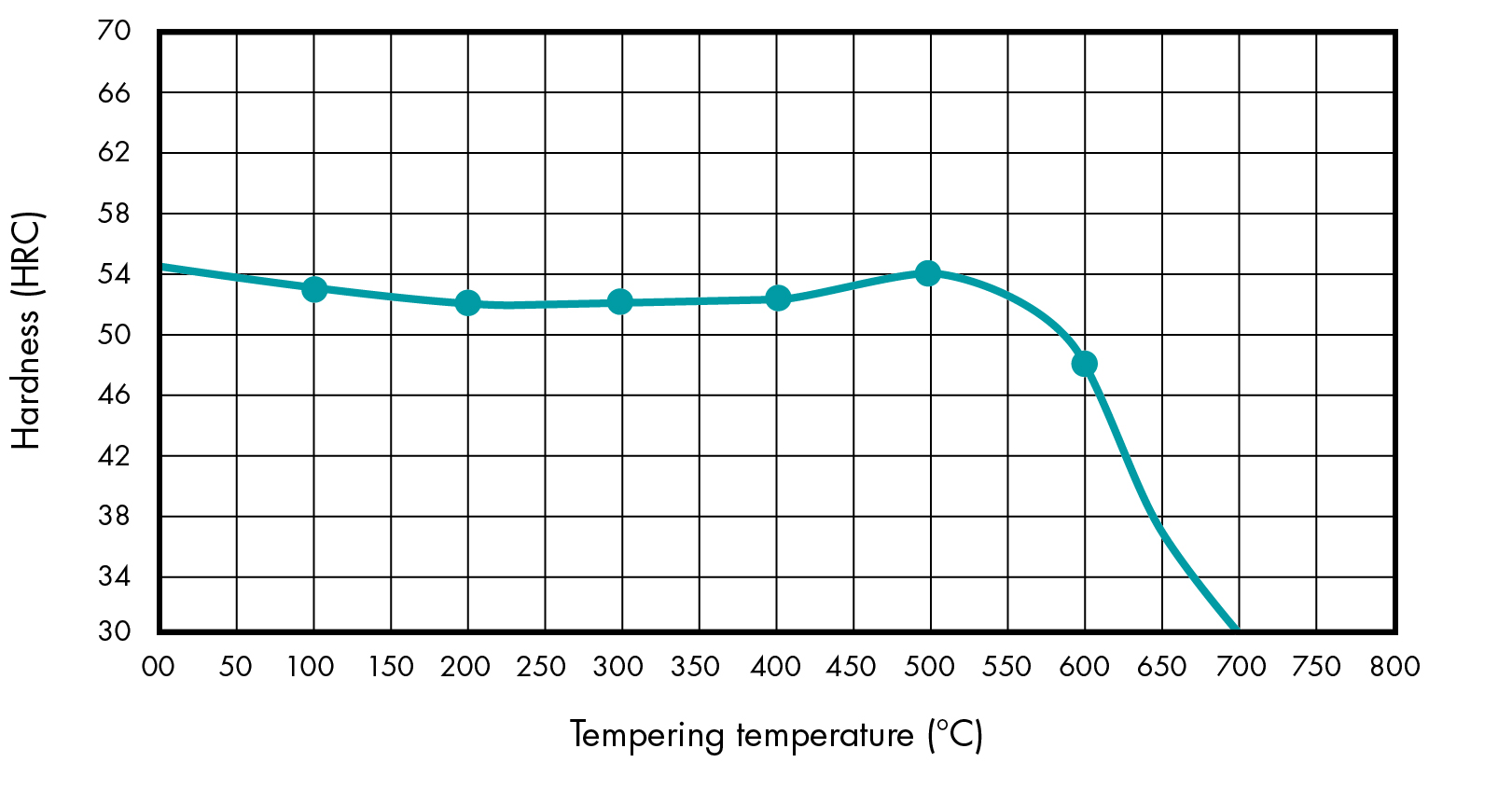
TREATMENT OPTIONS

Soft Anneling Stress-Relieving
Heat-Treatment
Hardening Quenching
Temperature 800 – 840 °C ca. 650 °C 1000 – 1040 °C Immediately after hardening, slowly heat to tempering temperature. Furnace time: 1 hour per 20 mm plate thickness, at least 2 hours. Air cooling. At least three tempering cycles recommended.
Cooling 10 – 20 °C/h furnace cooling After complete heating, hold at temperature for at least 1 hour under protective atmosphere. Slow cooling in the furnace. Oil, N2, salt bath
(500 – 550 °C), air
Workability

● ● ● ○ ○

Toughness

● ● ● ● ●

Dimensional stability

● ● ● ○ ○

Wear resistance

● ● ● ● ○

Corrosion Resistance

● ○ ○ ○ ○

Polishability

● ● ● ○ ○

Weldability

● ● ● ● ○


1.2767

CHEMICAL COMPOSITION

C

0,40 – 0,50%

Si

0,10 – 0,40%

Mn

0,20 – 0,50%

P

max. 0,010%

S

max. 0,001%

Cr

1,20 – 1,50%

Mo

0,15 – 0,35%

Ni

3,80 – 4,30%

As-supplied Hardness

max. 285 HB

Tensile Strength

830 N/mm²

Working Hardness

50 – 55 HRC

Applications

  • Hardened mould plates for injection mould and die standard parts

  • Through-hardened inserts for injection moulds

  • Stamping tools, shaping die and bending tools

CHEMICAL COMPOSITION
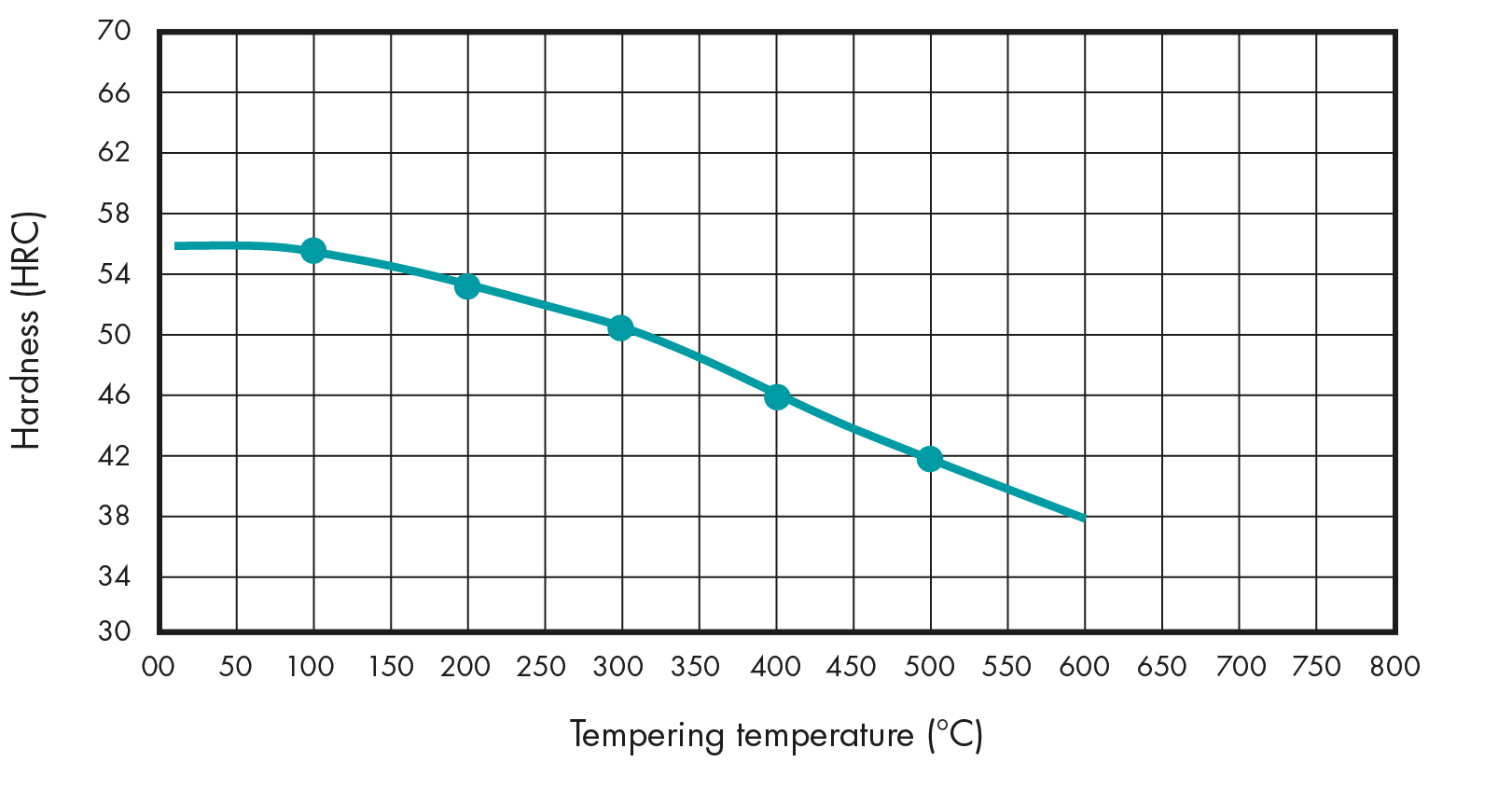
TREATMENT OPTIONS

Soft Annealing Stress-Relieving
Heat-Treatment
Hardening Quenching
Temperature 610 – 650 °C 840 – 870 °C Immediately after hardening, slowly heat to tempering temperature. Furnace time: 1 hour per 20 mm plate thickness, at least 2 hours. Air cooling. At least three tempering cycles recommended.
Cooling Slow furnace cooling Oil, air, salt bath
Workability

● ● ● ○ ○

Toughness

● ● ● ● ●

Dimensional stability

● ● ● ○ ○

Wear resistance

● ● ● ● ○

Corrosion Resistance

● ○ ○ ○ ○

Polishability

● ● ● ● ○

Weldability

● ● ● ● ○


1.2738

CHEMICAL COMPOSITION

C

0,35 – 0,45%

Si

0,20 – 0,40%

Mn

1,40 – 1,60%

P

max. 0,025%

Cr

1,80 – 2,10%

Mo

0,15 – 0,25%

Ni

0,90 – 1,20%

As-supplied Hardness

280 – 320 HB

Tensile Strength

950 – 1050 N/mm²

Working Hardness

As-supplied Hardness

Applications

  • Large plastic moulds, highly stressed in core

  • Mould-frames for plastic and die casting moulds

CHEMICAL COMPOSITION
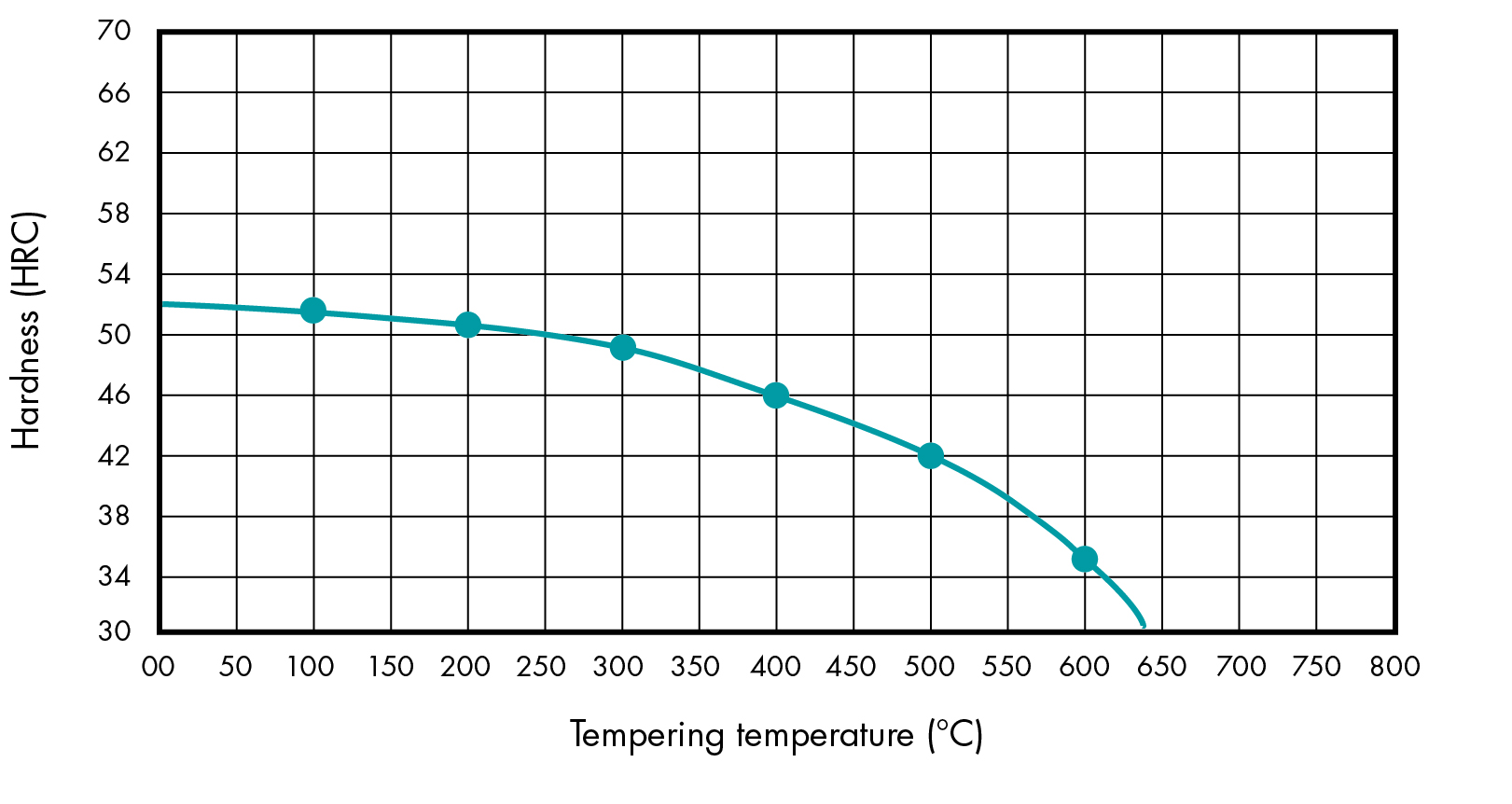
TREATMENT OPTIONS

Soft Annealing Stress-Relieving
Heat-Treatment
Hardening Quenching
Temperature 710 – 740 °C 500 – 550 °C 840 – 870 °C Pre-heat to 350 °C, then increase with 50°C/h to 600 °C; hold for 12 hours; cool in the oven to 350 °C, then open and air cool.
Cooling 4 – 6 h furnace cooling 2 – 3 h furnace cooling Oil, hot bath, air
Workability

● ● ● ● ○

Toughness

● ● ● ● ●

Dimensional stability

● ● ● ● ●

Wear resistance

● ● ● ○ ○

Corrosion Resistance

● ○ ○ ○ ○

Polishability

● ● ● ● ○

Weldability

● ● ● ● ○


MATERIAL TX® 33

CHEMICAL COMPOSITION

C

0,22 – 0,24%

Si

0,60 – 1,10%

Mn

0,80%

P

max. 0,010%

S

max. 0,003%

Cr

1,00 – 1,20%

Mo

0,30%

V

0,10 – 0,11%

Ni

max. 1,00%

CE IIW

0,62 – 0,71%

CET

0,40 – 0,44%

As-supplied Hardness

275 – 325 HB

Tensile Strength

980 N/mm²

Working Hardness

As-supplied Hardness

Applications

  • Injection moulding applications

  • Plastic and rubber injection moulding

  • Construction and wear parts

TREATMENT OPTIONS

Soft Annealing Stress-Relieving
Heat-Treatment
Hardening Tempering Quenching
Temperature not necessary
Cooling not necessary
Workability

● ● ● ● ●

Toughness

● ● ● ● ●

Dimensional stability

● ● ● ● ●

Wear resistance

● ● ● ● ○

Corrosion Resistance

● ○ ○ ○ ○

Polishability

● ● ● ● ●

Weldability

● ● ● ● ○


MATERIAL TX® 44

CHEMICAL COMPOSITION

C

0,32%

Si

0,60 – 1,10%

Mn

0,80%

P

max. 0,010%

S

max. 0,002%

Cr

1,35%

Mo

0,80%

V

0,14%

Ni

max. 1,00%

CE IIW

0,94 – 0,98%

CET

0,55 – 0,57%

As-supplied Hardness

410 – 475 HB

Tensile Strength

1450 N/mm²

Working Hardness

As-supplied Hardness

Applications

  • Mould plates and mould inserts for injection tools

  • Components subject to high stress, without subsequent heat-treatment

TREATMENT OPTIONS

Soft Annealing Stress-Relieving
Heat-Treatment
Hardening Tempering Quenching
Temperature not necessary
Cooling not necessary
Workability

● ● ○ ○ ○

Toughness

● ● ● ● ●

Dimensional stability

● ● ● ● ○

Wear resistance

● ● ● ● ○

Corrosion Resistance

● ○ ○ ○ ○

Polishability

● ● ● ● ●

Weldability

● ● ● ● ○